
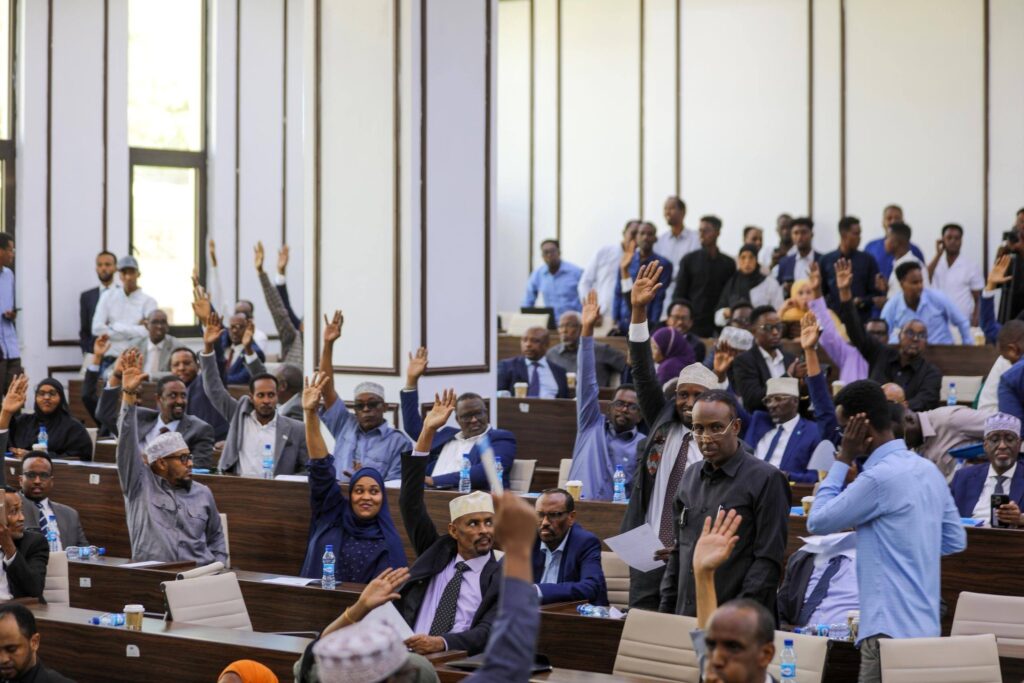
A section of Somali lawmakers has opposed the new constitutional reforms proposed by President Hassan Sheikh Mohamud’s administration.
The Wednesday session was disrupted with shouting matches from the members of parliament of the Federal Republic of Somalia, the bone of contention being the comprehensive package of constitutional amendments proposed by the administration.
Supporters argued that the reforms are essential for stabilizing the federal system and streamlining executive powers. However, those opposing it view the move as a power grab that threatens the delicate balance between the central government and the federal member state.
The most contentious proposed changes include the reforms to move Somalia away from a traditional semi-parliamentary system towards a powerful presidential system; this means the president will gain authority to appoint and dismiss prime ministers and potentially abolish the role in favor of a vice president.
The opposition has argued that consolidating much power to one person erodes the checks and balances necessary in a fragile post-conflict state.
There is also a standoff on the one-person-one-vote election system, which is replacing the traditional 4.5-clan-based indirect system—where elders choose lawmakers—with the direct one-person-one-vote for the 2026 election.
The system has already been used in the December local council election in Banadir, but the opposition leaders and federal member states like Puntland and Jubaland argue that the country is not secure enough for such a vote. They have also raised fears of election rigging.
The new reforms also seek to establish a single federal-level electoral commission to oversee all state and national elections. The regional state has opposed the proposal, viewing it as an attack on federalism, believing it will give Mogadishu an upper hand in picking their desired leaders.
Presidential term limit: the new reforms have proposed shifting from a 4-5-year term limit and granting the president more influence over the judicial and independent commission appointments.
The marginalization of federal member states: major states like Puntland have already declared they will only recognize the federal authority after reforms that are inclusive are made in the constitution.
The speaker has adjourned the session indefinitely, calling for a period of reflection.
Leave a Reply