
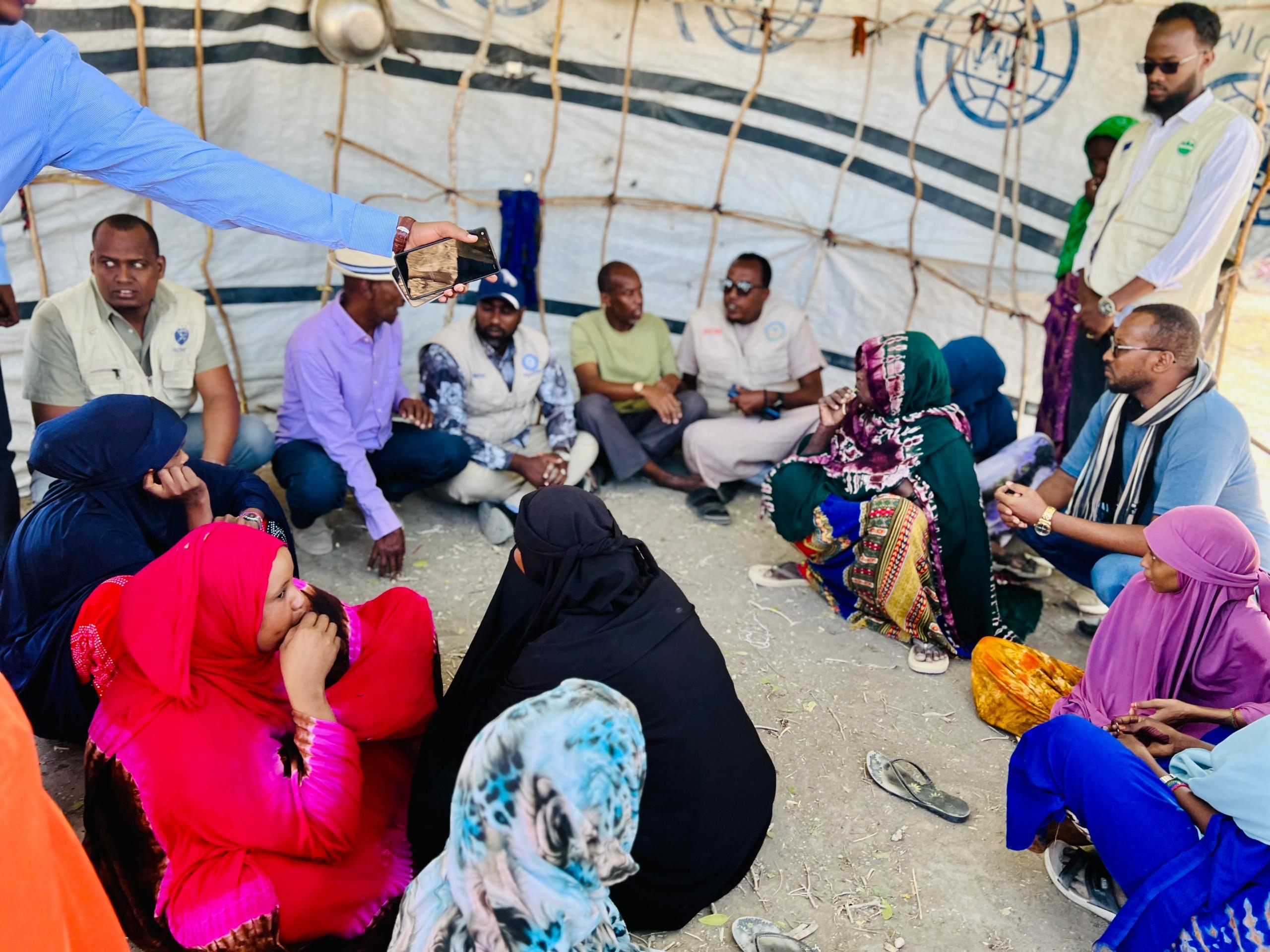
AFMADOW (RAXANREEB ) –In Afmadow, a small town near Somalia’s border with Kenya, thousands of newly displaced families are sheltering under makeshift structures they now call home, having fled a relentless drought that has killed their livestock and left entire communities without food or water.
The growing influx into Afmadow is the latest sign of a deepening climate-driven humanitarian crisis in Jubaland.
Authorities say more than 1.5 million people across the region are now directly affected by a worsening drought linked to rising global temperatures and failed seasonal rains.
Jubaland’s Minister of Humanitarian Affairs and Disaster Management, Abdirahman Mohamed Dhiriq, leading of the drought committee appointed in December, visited Afmadow district in the Lower Juba region to assess conditions on the ground and the impact of the drought on daily life, particularly among vulnerable populations.
“The situation is deteriorating rapidly, while humanitarian assistance remains extremely limited,” Minister Dhiriq said.
“Afmadow district was already hosting thousands of internally displaced people, but it has now received new arrivals fleeing drought-hit areas including Xagar, Jilib, Bu’aale, and surrounding parts of Afmadow,” he added.
According to the minister, many families are fleeing with only a handful of animals left—often two or three livestock—hoping to reach areas where water is still available.
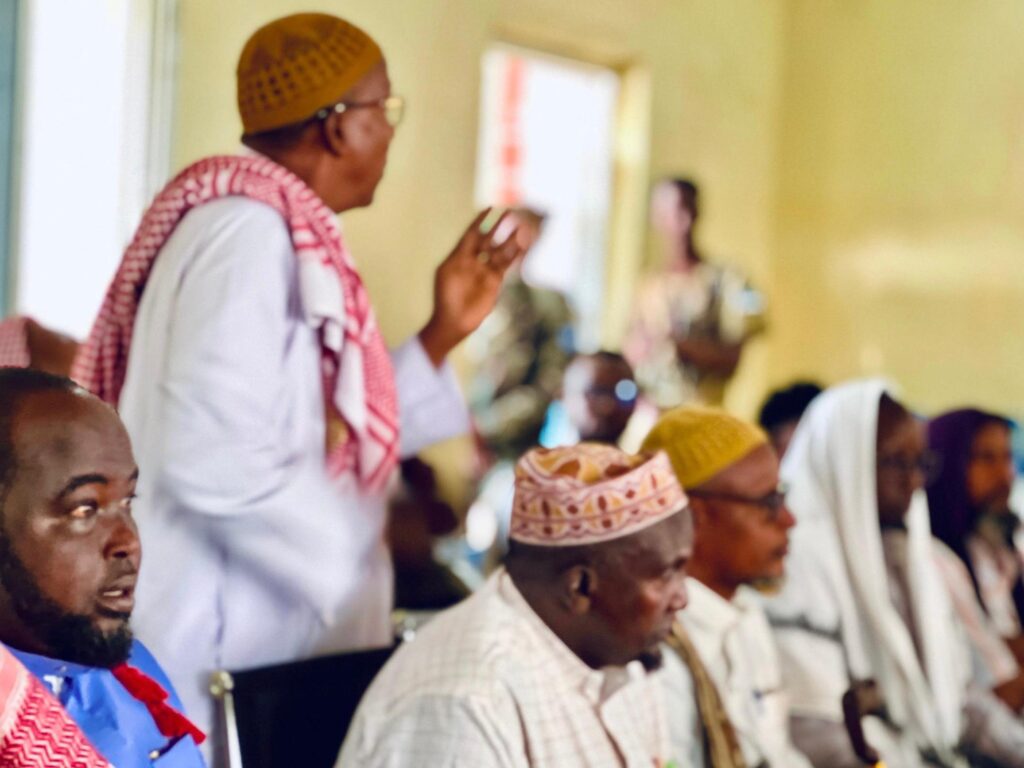
Over recent months, Afmadow has emerged as one of the main destinations for drought-displaced families, highlighting the urgent need for sustained emergency humanitarian assistance.
Livestock dying, livelihoods lost
For Hussein Ali, a man in his late 50s now living in Afmadow, the drought meant losing everything.
“Cattle were our livelihood,” he said. “When the drought killed all our animals, we had no choice but to leave. Many families like ours are now living here.”
Displacement figures continue to rise across Jubaland. Local aid groups say that more than 61,800 people have been displaced in Gedo region, nearly 13,400 in Lower Juba, and over 3,000 in Middle Juba during 2025 alone. More than 2,000 families have arrived in Afmadow in recent weeks.
Jubaland authorities and local organizations warn that over two million livestock are at risk due to the drought, particularly across Gedo region.
An estimated 78 percent of households in drought-affected areas of Jubaland are facing severe food insecurity.
The hardest-hit locations include Kismayo, Badhaadhe, Ceel Waaq, Bu’aale, Afmadow, and Garbahaarey.
Parts of Jubaland—especially Middle Juba—remain under the control of Al-Shabaab, where restrictions on independent humanitarian access have further complicated relief efforts.
As a result, many civilians are fleeing those areas toward districts near Kismayo. The group has also established its own drought committee under its administration.
The crisis has been compounded by the failure of the Deyr rains (October–December), dealing a devastating blow to pastoralists and farmers whose livelihoods depend on seasonal rainfall.
Nationwide, the situation is equally dire. The United Nations estimates that more than 4.6 million people—nearly a quarter of Somalia’s population—have been affected by drought conditions.
Humanitarian funding has also declined sharply. The UN says only 23.7 percent of the funds required for Somalia’s 2025 humanitarian response plan have been secured, raising fears that life-saving assistance may not reach those most in need.
Leave a Reply