
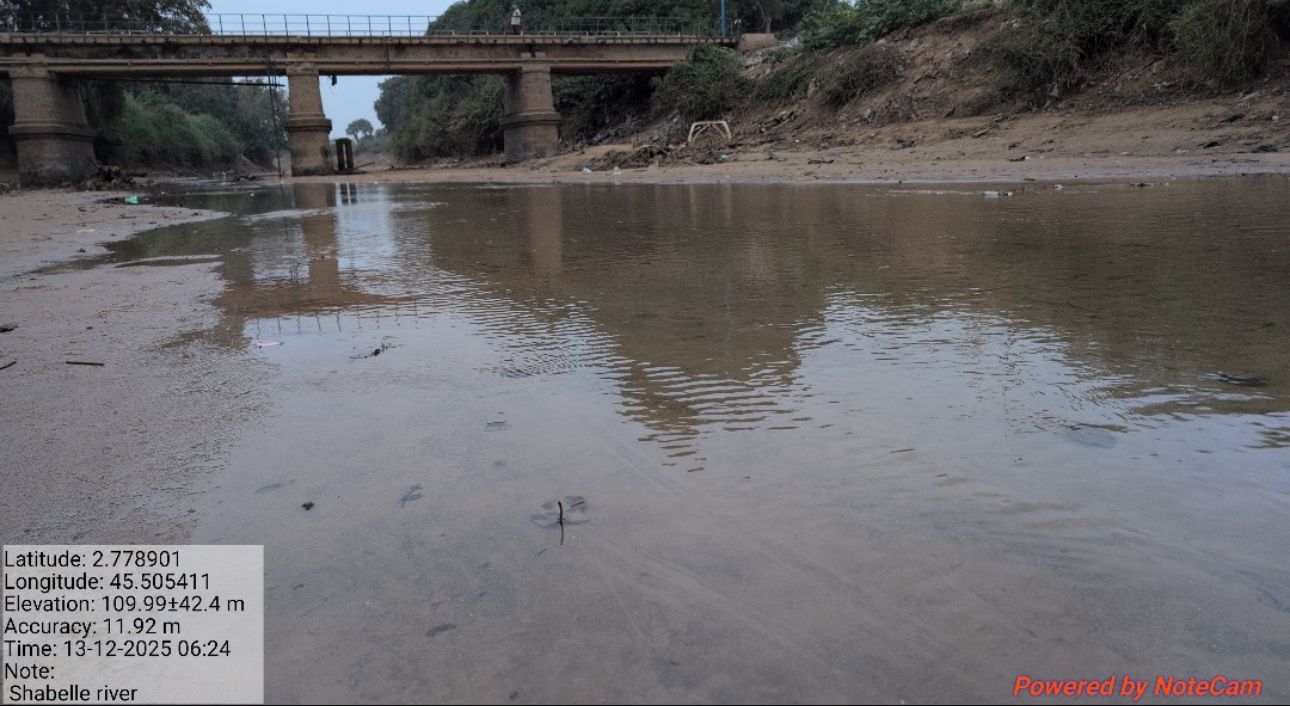
The Food and Agriculture Organization of the United Nations (FAO) Somalia Water and Land Information Management (SWALIM) has raised alarm over a rapid and unprecedented decline in water levels of the Shabelle River, warning of serious humanitarian and environmental consequences.
Recent hydrological readings from monitoring stations in Belet Weyne and Bulo Burte show that the river’s water level has fallen to the lowest point ever recorded in Somalia. FAO-SWALIM said the situation increases the risk of severe water shortages, displacement, crop failure, and livestock deaths across river-dependent communities.
The Shabelle River, Somalia’s longest river, stretches approximately 1,820 to 2,064 kilometres and originates in the Ethiopian highlands before flowing through central and southern Somalia. It is a critical lifeline for millions of people, particularly in agricultural areas that rely heavily on river-based irrigation.
FAO-SWALIM estimates that more than 220,000 hectares of farmland depend directly on the Shabelle River for irrigation. Millions of livestock, including cattle, camels, goats, and sheep, also rely on the river during the dry season when alternative water sources are scarce.
The agency warned that continued decline in river levels could worsen food insecurity, undermine livelihoods, and intensify humanitarian pressures in already vulnerable regions, calling for urgent monitoring and preparedness measures.
Leave a Reply