
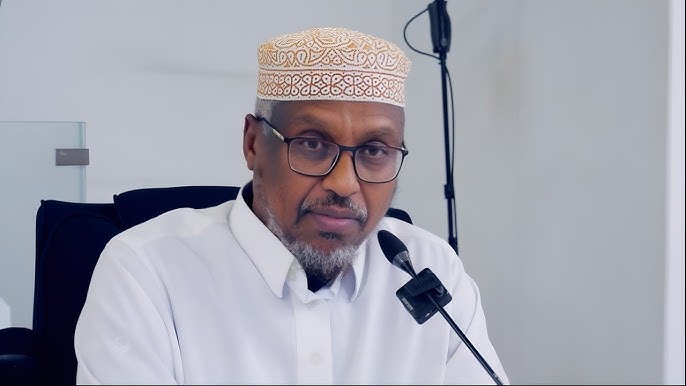
A senior Somali Islamic scholar has issued a strong warning against recent moves by the administration of Somalia’s North-Western regions to engage with Israel, describing such steps as politically dangerous and morally indefensible in light of events in Palestine.
Speaking during a public sermon, Sheekh Mustafa Xaaji Ismaaciil Haaruun criticised what he described as Israel’s long history of aggression, with particular reference to policies pursued by the government of Benjamin Netanyahu. He stated that the scale of Israeli actions has drawn condemnation not only from Muslim-majority countries but also from Christian states, which he said are increasingly alarmed by what they view as serious violations of international and humanitarian norms.
The cleric rejected narratives that frame Israel’s actions purely through a religious lens, arguing instead that Israel represents a settler-colonial project. He described Israeli society as being composed largely of people who arrived from other countries with the aim of dominating indigenous populations, adding that, in his view, Israel has consistently violated agreements it has entered into.
Addressing political leaders and the wider public in the North-Western regions of Somalia, Sheikh Mustafa urged them to reflect on how they would react if similar actions were carried out in their own cities. He cited Hargeisa, Berbera, and Burco as examples, warning that any attempt to legitimise the settlement of foreign populations in such areas under the guise of political recognition would be strongly rejected by the local population.
Sheikh Mustafa also responded to arguments made by some politicians who have attempted to justify engagement with Israel by citing historical treaties between Prophet Muhammad (peace be upon him) and Jewish communities. He clarified that those agreements were made with Jewish tribes living under the authority of the Islamic state in Medina, not with occupying or invading forces. He further stated that those treaties were annulled only after being violated, and therefore cannot be used as a justification for modern political relations with Israel.
In his remarks, the scholar referred extensively to the humanitarian situation in Gaza, stating that Israeli military operations have not distinguished between civilians and combatants. He alleged that large-scale destruction of religious sites has taken place, including mosques and churches, and claimed that millions of Palestinians are suffering under siege conditions that have led to widespread hunger and loss of life.
Sheikh Mustafa concluded by warning that entering into agreements or political cooperation with Israel would have serious consequences, both politically and morally. He cautioned that such engagement risks contributing to injustice and instability, and urged Somali society and its leaders to distance themselves from any actions that could be interpreted as endorsing oppression.
Leave a Reply