
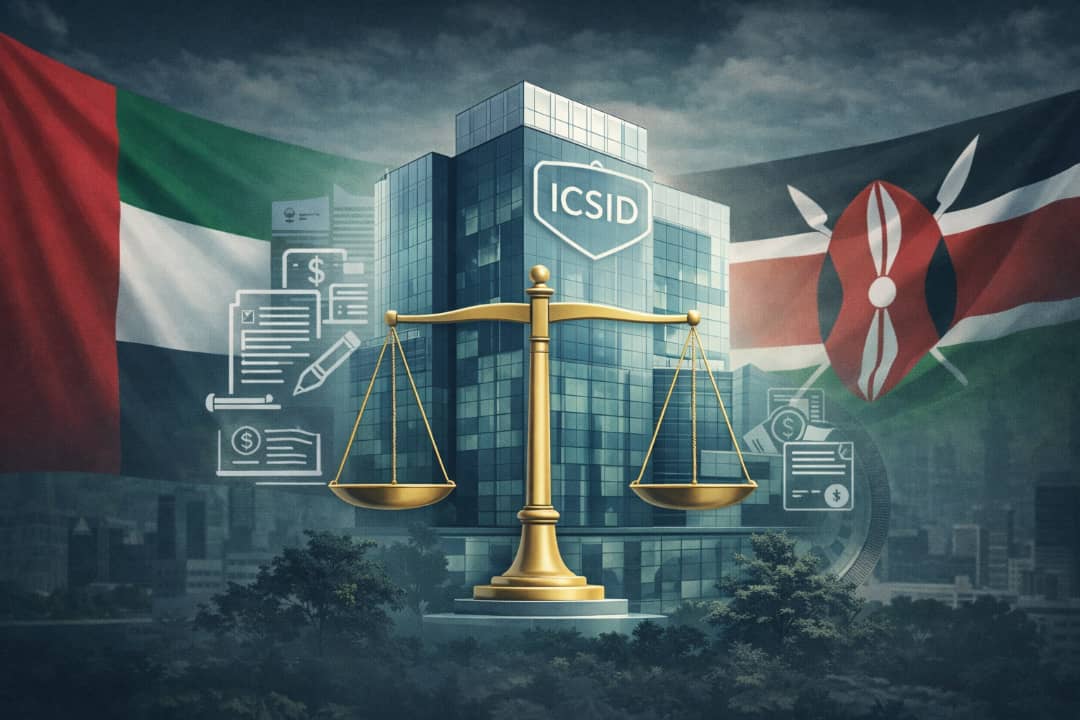
Engineering firm seeks annulment of arbitral award, alleging tribunal overreach and denial of due process under UAE–Kenya investment treaty
Spentech Engineering Limited has mounted a formal challenge against a ruling of the International Centre for Settlement of Investment Disputes (ICSID), asking for the annulment of an arbitral award that dismissed its claims against the United Arab Emirates in a high-stakes investment dispute linked to UAE embassy projects in Somalia.
The challenge targets an award issued on 28 July 2025, in which an ICSID tribunal dismissed Spentech’s case at a preliminary stage, concluding that the claims were “manifestly without legal merit” under Rule 41(5) of the ICSID Arbitration Rules. Spentech argues that the tribunal acted beyond its mandate, departed from fundamental procedural safeguards, and failed to give proper reasons for its conclusions, contrary to the requirements of the ICSID Convention.
ROOTS OF THE DISPUTE
The dispute traces back to a series of construction contracts signed between 2016 and 2020 between Spentech and the UAE Embassy in Mogadishu. The projects included the construction of military barracks, the Sheikh Zayed Hospital, embassy infrastructure, landscaping and roadworks, and the supply of specialised hospital equipment.
Although the construction sites were physically located in Somalia, the contracts were governed by UAE law and subjected disputes to the exclusive jurisdiction of UAE courts. Key elements of the projects were carried out in the UAE, including architectural and engineering design, procurement, project coordination, technical compliance, and financial transactions. To support these activities, Spentech established a permanent operational presence in Dubai.
The projects were financed through Spentech’s own resources and a USD 3.05 million facility from Kenya Commercial Bank, with interest accruing to approximately USD 2.55 million by April 2024.
Construction was suspended in 2018 following a diplomatic breakdown between Somalia and the UAE, which led to the recall of ambassadors from both capitals. Spentech says it remained on site but was limited to minimal activities and was advised not to disclose the true cause of the suspension, instead attributing delays to the COVID-19 pandemic.
PAYMENT DISPUTRE AND ALLEGED ABUSES
In November 2022, with the works reportedly more than 90 per cent complete, Spentech’s Chief Executive Officer, Eng. Maurice O. Owiti, was invited to the UAE Embassy in Mogadishu to discuss outstanding payments. UAE officials concluded that USD 6.79 million remained payable, while Spentech maintained that the correct figure stood at USD 8.64 million. The UAE also alleged that Spentech had previously received USD 4.13 million in cash—an allegation the company has consistently denied.
Spentech further alleges that UAE officials seized its construction equipment, office assets, and intellectual property, including architectural and technical drawings. The company also claims that Eng. Owiti was unlawfully detained for four months in Somalia by UAE agents and subjected to degrading treatment.
Efforts to resolve the dispute through settlement talks in early 2023 allegedly took place under coercive conditions. Parallel proceedings brought before the Administrative Court of Abu Dhabi were dismissed without a substantive hearing.
ARBITRATION AND EARLY DISMISSAL
On 26 April 2024, Spentech initiated arbitration proceedings before ICSID under the 2014 UAE–Kenya Bilateral Investment Treaty (BIT), alleging that the UAE’s conduct breached its treaty obligations.
The tribunal was constituted in September 2024, chaired by Loretta Malintoppi of Italy, with Christopher Greenwood of the United Kingdom appointed by the UAE and Christopher Adebayo Ojo of Nigeria appointed by Spentech. After written submissions and a virtual hearing, the tribunal upheld the UAE’s jurisdictional objection and dismissed the case without proceeding to a full examination of the facts.
BASIS OF THE ANNULMENT APPLICATION
In its annulment request, Spentech argues that the tribunal committed a manifest excess of powers by refusing to determine whether the company had made a protected “investment” under the BIT—an issue squarely placed before it by the parties.
Spentech contends that its investment included tangible assets under UAE authority through diplomatic premises, as well as intangible assets such as contractual rights, claims to payment, and intellectual property governed by UAE law and enforceable before UAE courts. According to the company, these fell within the treaty’s broad definition of investment but were dismissed without proper consideration.
The firm also alleges a serious departure from fundamental rules of procedure, arguing that the tribunal made critical factual findings without evidentiary support and without allowing the claimant a meaningful opportunity to present and test evidence. The summary dismissal, Spentech says, denied it due process.
Finally, the application accuses the tribunal of failing to state reasons on key legal issues, including the territorial nexus of intangible investments and the application of the “centre of gravity” test. Spentech argues that the tribunal relied on bare assertions rather than a reasoned analysis consistent with the Vienna Convention on the Law of Treaties.
WIDER IMPLICATIONS
The case has attracted attention among arbitration practitioners as it touches on the treatment of cross-border investments involving intangible assets and sovereign conduct exercised through diplomatic channels. The annulment committee’s decision may clarify the limits of summary dismissal under the ICSID system.
For Spentech, the annulment application represents a last effort to revive claims it says were dismissed prematurely. For states and investors alike, the proceedings underscore ongoing debates about tribunal discretion, jurisdiction, and procedural fairness in treaty-based arbitration.
The outcome of the annulment proceedings is expected to be closely watched across the international investment arbitration community.
Leave a Reply